
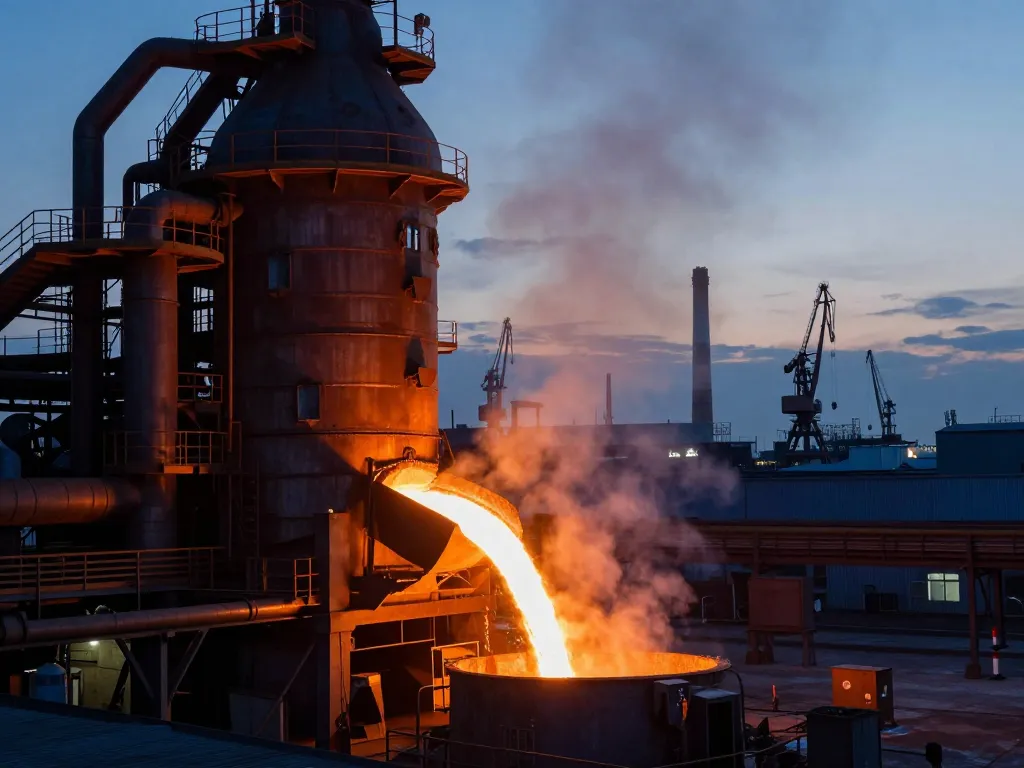
Fundamentals of Heavy Industry
Heavy industry forms the backbone of modern economies, playing a pivotal role in the production and manufacturing of goods that are essential for daily life and technological advancement. This sector encompasses a broad range of activities, from the extraction of raw materials to the production of heavy machinery and infrastructure development. Understanding the fundamentals of heavy industry is crucial for professionals, students, and stakeholders involved in engineering and manufacturing.
Definition and Scope of Heavy Industry
Heavy industry refers to the large-scale manufacturing processes that involve the transformation of raw materials into finished products, typically using significant amounts of energy and resources. This sector includes industries such as steel manufacturing, shipbuilding, automotive, aerospace, construction, and mining. The scope of heavy industry is considerable, impacting various sectors including defense, transportation, and energy. Heavy industry is characterized by:
- High capital investment: Businesses in this sector often require substantial financial resources to establish and maintain operations.
- Large-scale operations: Heavy industries typically produce goods in bulk, necessitating extensive facilities and workforce.
- Complex supply chains: The nature of operations often involves intricate logistics and supply chains to manage raw materials and distribution.
Key Sectors and Their Contributions
Several sectors fall under the umbrella of heavy industry, each contributing uniquely to the economy. Below are a few key sectors and their contributions:
- Steel Industry: Vital for construction and manufacturing, the steel industry contributes billions to the global GDP and employs millions worldwide. For example, in 2021, the global crude steel production was approximately 1.95 billion metric tons.
- Shipbuilding: This sector is essential for global trade, as over 90% of the world’s goods are transported by sea. Major shipbuilding nations include South Korea, China, and Japan, which dominate the market.
- Aerospace: With a focus on innovation and safety, the aerospace sector is crucial for transportation and defense, contributing significantly to national economies through job creation and technological advancements.
- Mining: The extraction of minerals and resources is foundational for other industries, providing essential raw materials such as coal, copper, and iron ore.
Challenges Faced by Heavy Industry
Despite its contributions, heavy industry faces numerous challenges that can hinder growth and sustainability. Key challenges include:
- Regulatory Compliance: Adhering to environmental and safety regulations can be complex and costly, impacting operational efficiency.
- Technological Advancements: Keeping pace with rapid technological changes can be a challenge, requiring continuous investment in new technologies and training.
- Labor Shortages: The sector often struggles with attracting and retaining skilled labor, exacerbated by an aging workforce.
- Market Volatility: Fluctuations in demand and raw material prices can significantly affect profitability and operational stability.
Engineering Principles in Heavy Industry
The success of heavy industry is grounded in a variety of engineering principles. These principles govern the design, construction, and operation of industrial systems and structures, ensuring efficiency, safety, and sustainability.
Core Engineering Disciplines Applied
Heavy industry incorporates several core engineering disciplines, each contributing to the sector's overall functionality:
- Civil Engineering: Essential for infrastructure development, civil engineers design and construct buildings, bridges, and other structures that support industrial operations.
- Mechanical Engineering: Focused on the design and manufacturing of machinery, mechanical engineers play a vital role in improving productivity and efficiency in manufacturing processes.
- Chemical Engineering: Chemical engineers are crucial in processes involving the transformation of raw materials, particularly in industries such as petrochemicals and pharmaceuticals.
- Electrical Engineering: This discipline ensures that machinery and equipment operate smoothly, involving power supply, automation, and control systems.
Materials Science and Its Importance
Materials science is a fundamental aspect of heavy industry, influencing the selection and application of materials used in manufacturing. Understanding the properties and behaviors of materials is essential for optimizing performance and durability. Key points include:
- Material Selection: Engineers must choose materials that meet specific requirements for strength, weight, and corrosion resistance. For example, titanium alloys are favored in aerospace for their strength-to-weight ratio.
- Innovation in Materials: Advances in composites and nanomaterials are driving innovation in heavy industry, allowing for the development of lighter and stronger products.
- Testing and Quality Assurance: Rigorous testing of materials ensures safety and reliability, particularly in sectors like aerospace and automotive.
Design and Manufacturing Processes
The design and manufacturing processes in heavy industry are complex and multifaceted, often requiring collaboration across various engineering disciplines. Key aspects include:
- Design for Manufacturability (DFM): This principle emphasizes designing products in a way that simplifies manufacturing processes, reducing costs and time.
- Lean Manufacturing: Implementing lean principles helps minimize waste and maximize productivity, a crucial aspect for staying competitive in the heavy industry.
- Advanced Manufacturing Techniques: Technologies such as 3D printing and additive manufacturing are transforming traditional processes, allowing for more efficient production and customization.
Advanced Technologies in Heavy Industry
The integration of advanced technologies is reshaping heavy industry, enhancing efficiency, safety, and overall productivity. These innovations are crucial for staying competitive in a rapidly evolving market.
The Role of Automation and Robotics
Automation and robotics play a transformative role in heavy industry by streamlining operations and minimizing human error. Examples include:
- Automated Assembly Lines: Many automotive manufacturers, such as Toyota, use automated assembly lines to improve speed and consistency in production.
- Robotic Welding: In industries like shipbuilding, robotic welding enhances precision and reduces labor costs, resulting in higher-quality products.
- Predictive Maintenance: Automation technologies allow for real-time monitoring of machinery, predicting failures before they occur and minimizing downtime.
Integration of IoT in Heavy Engineering
The Internet of Things (IoT) is revolutionizing heavy engineering by enabling interconnectivity between machines, systems, and devices. This integration offers numerous benefits:
- Real-Time Data Analytics: IoT devices collect and analyze data in real time, allowing for informed decision-making and enhanced operational efficiency.
- Supply Chain Optimization: IoT facilitates improved tracking of materials and products throughout the supply chain, reducing delays and costs.
- Remote Monitoring: Operators can monitor equipment remotely, enhancing safety and operational efficiency.
Impact of Artificial Intelligence on Operations
Artificial Intelligence (AI) is increasingly being adopted in heavy industry, offering capabilities that enhance operations and decision-making processes:
- Data-Driven Insights: AI algorithms analyze vast datasets to identify trends, optimize processes, and predict outcomes, leading to improved efficiency.
- Quality Control: AI can be used for automated inspection processes, ensuring that products meet quality standards without the need for extensive manual checks.
- Energy Management: AI systems can optimize energy consumption in manufacturing processes, contributing to sustainability efforts.
Environmental Considerations and Sustainability
As global awareness of environmental issues increases, heavy industry faces pressure to adopt sustainable practices. Addressing environmental considerations is not only essential for compliance but also for enhancing corporate responsibility.
Regulations and Compliance in Heavy Industry
Heavy industry is subject to numerous regulations aimed at protecting the environment and ensuring workplace safety. Compliance with these regulations is crucial for operational success:
- Environmental Protection Agency (EPA): In the United States, the EPA enforces regulations that limit emissions and discharges from industrial activities.
- ISO Standards: Many companies pursue ISO certifications to demonstrate their commitment to environmental management, such as ISO 14001.
- Health and Safety Regulations: Compliance with OSHA standards ensures worker safety and can mitigate risks associated with industrial operations.
Innovative Practices for Reducing Waste
Implementing innovative practices can significantly reduce waste in heavy industry, leading to cost savings and environmental benefits:
- Circular Economy: Embracing a circular economy approach involves designing products for reuse and recycling, minimizing waste generation.
- Lean Manufacturing: This methodology focuses on eliminating waste throughout the production process, from raw material acquisition to final delivery.
- Waste-to-Energy Technologies: Utilizing waste materials to generate energy can reduce landfill use and provide an alternative energy source for operations.
Renewable Energy Applications in Heavy Engineering
Heavy industry is increasingly adopting renewable energy solutions to power operations and reduce carbon footprints. Key applications include:
- Solar Energy: Many manufacturing facilities are installing solar panels to harness renewable energy, reducing reliance on fossil fuels.
- Wind Energy: Wind farms are providing energy to heavy industrial operations, particularly in regions with favorable wind conditions.
- Energy Storage Solutions: Advanced battery technologies are enabling industries to store excess renewable energy for use during peak demand periods.
Future Trends and Strategic Developments
The heavy industry landscape is continuously evolving, with emerging trends and strategic developments shaping its future. Staying ahead of these trends is essential for long-term success.
Emerging Markets and Global Impact
Emerging markets are becoming increasingly influential in heavy industry, with countries in Asia, Africa, and South America leading growth:
- Infrastructure Development: Rapid urbanization in these regions is driving demand for infrastructure, resulting in increased investments in heavy industry.
- Resource Availability: Emerging markets often have abundant natural resources, making them attractive locations for heavy industrial operations.
- Global Trade Dynamics: As emerging economies grow, they will play a larger role in global supply chains, impacting pricing and availability of goods.
Investment in Research and Development
Investing in research and development (R&D) is critical for innovation and competitiveness in heavy industry. Key considerations include:
- Technological Advancements: R&D efforts can lead to groundbreaking technologies that improve efficiency, safety, and sustainability.
- Collaboration with Academia: Partnering with universities and research institutions can facilitate knowledge sharing and access to cutting-edge research.
- Government Incentives: Many governments offer grants and incentives for R&D activities, encouraging industries to innovate.
Collaboration with Technology Startups
Collaboration with technology startups is becoming increasingly important in heavy industry, as these partnerships can lead to innovative solutions:
- Access to Cutting-Edge Technologies: Startups often bring fresh perspectives and technologies that can enhance industrial processes.
- Agility and Flexibility: Startups can respond quickly to market changes, making collaborations beneficial for large industrial firms seeking to adapt.
- Joint Ventures: Forming joint ventures with startups can provide the resources needed to scale innovative solutions while sharing risks.